Surface
A small porcelain form carries texture, curve, and the quiet irregularity of the hand.
Hand-shaped Jingdezhen porcelain, transformed by fire and finished for the body.
View the ProcessZELIN ART does not treat porcelain as decoration added to jewelry. The porcelain form comes first — its surface, edge, weight, and silence are considered before it is assembled into something worn.
A small porcelain form carries texture, curve, and the quiet irregularity of the hand.
Firing gives the body its permanence, changing softness into a material that can be held, worn, and kept.
Glaze and copper-gold detail are used with restraint, leaving only a trace of brightness where the form asks for it.
The making process is not presented as a factory sequence. It is a gradual movement: first the porcelain body, then the surface, then the final trace that allows the piece to become jewelry.
Carving · First Firing
The form is shaped before it is decorated. Proportion, edge, and movement are decided while the porcelain is still quiet and unfinished.
Hand Painting · Glazing · Porcelain Firing
Color, line, and glaze enter the surface through the hand and are fixed through heat.
Copper-gold Detail · Final Firing · Assembly
A restrained trace of metal, a final firing, and the careful pairing of components complete the transition from porcelain element to wearable object.
Each stage leaves something behind: pressure from the hand, change from the kiln, color beneath glaze, or the final balance of a piece made to be worn.
The porcelain body is shaped and stabilized before any surface detail is added.
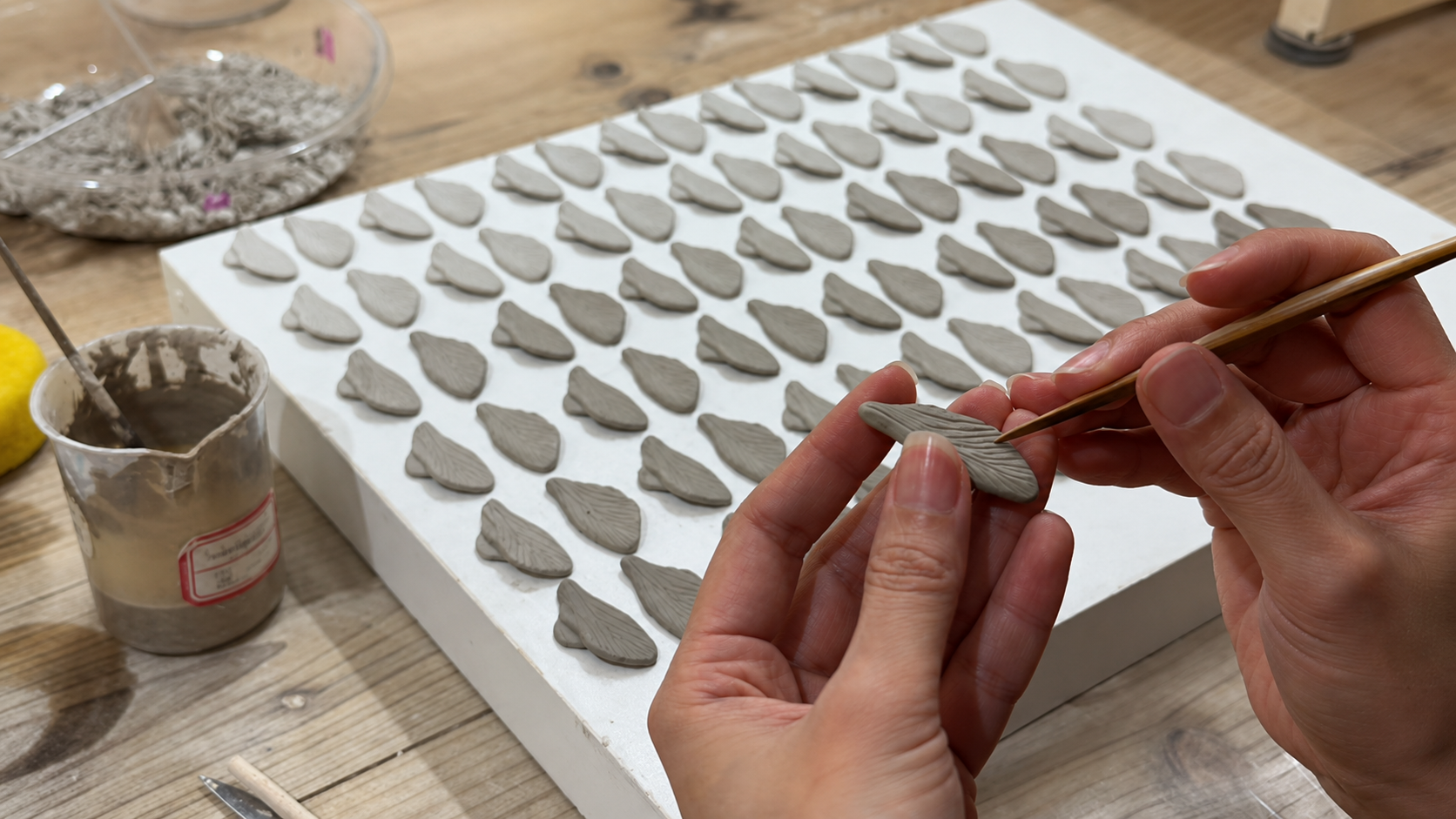
The first gesture is made by hand. Texture, curve, and silhouette begin here.
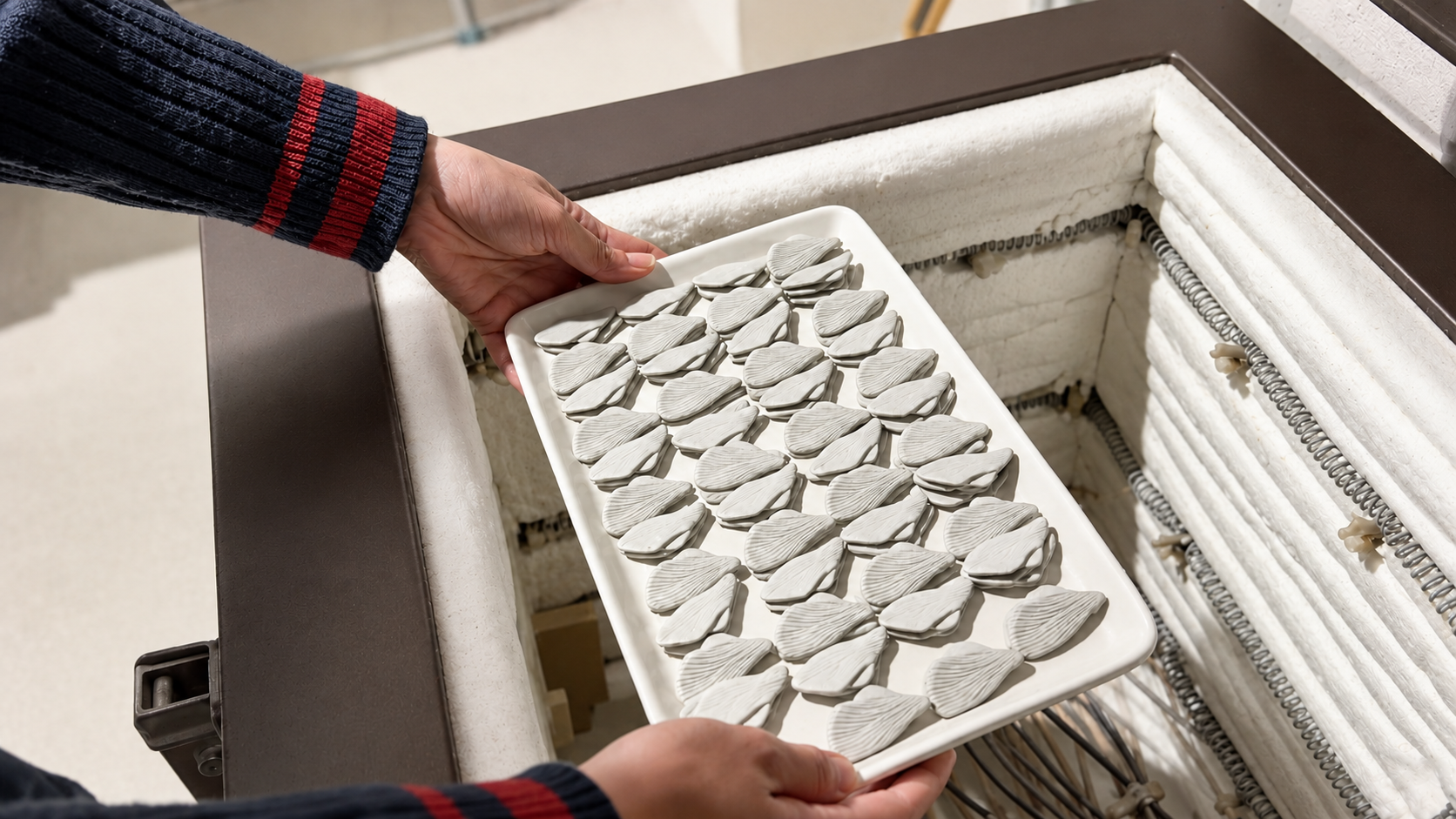
The first firing strengthens the fragile body and prepares it for surface work.
Line, color, and glaze are introduced, then transformed by high firing into a lasting porcelain surface.
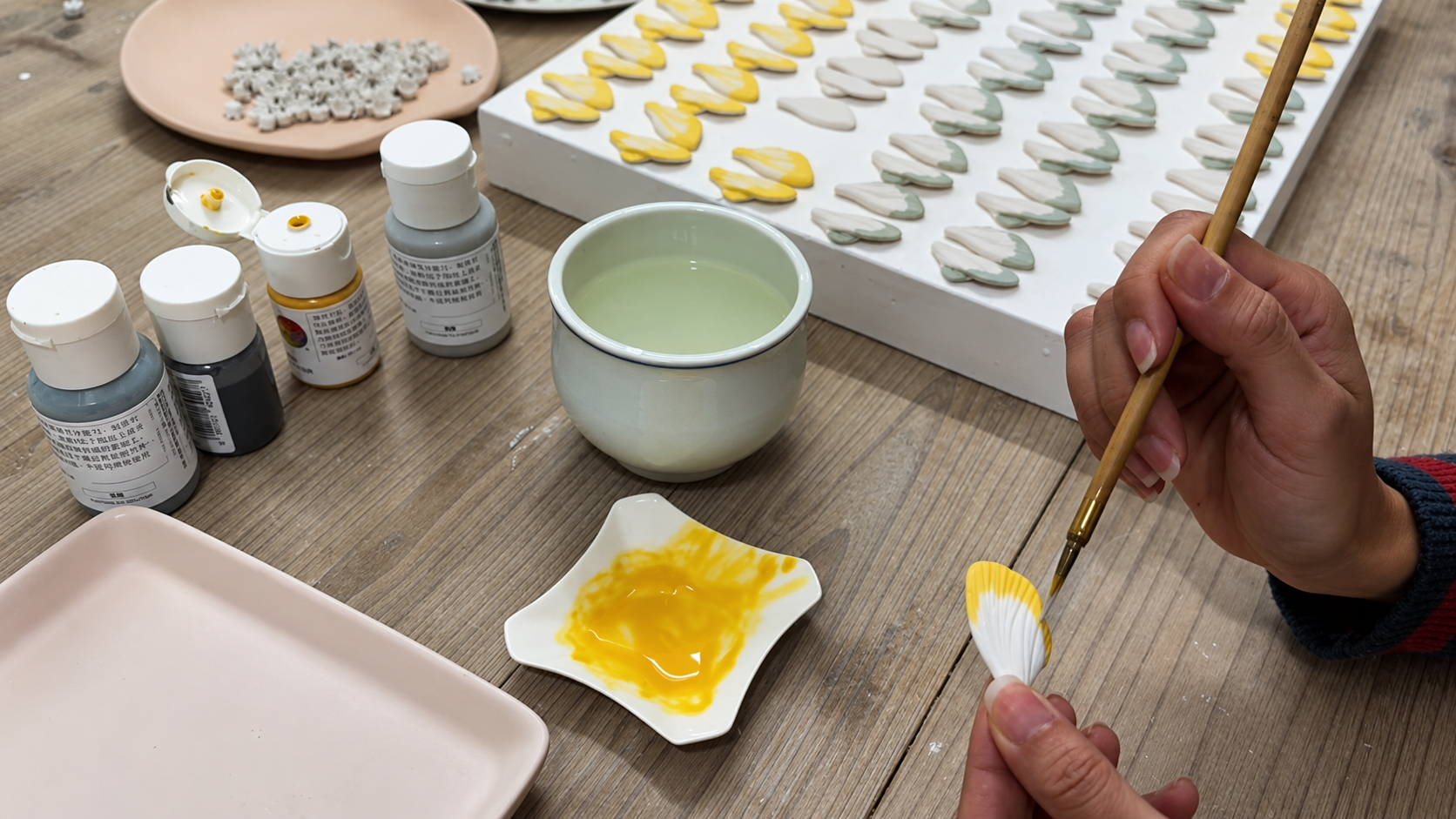
Color and line are applied individually, allowing each surface to keep a subtle human difference.
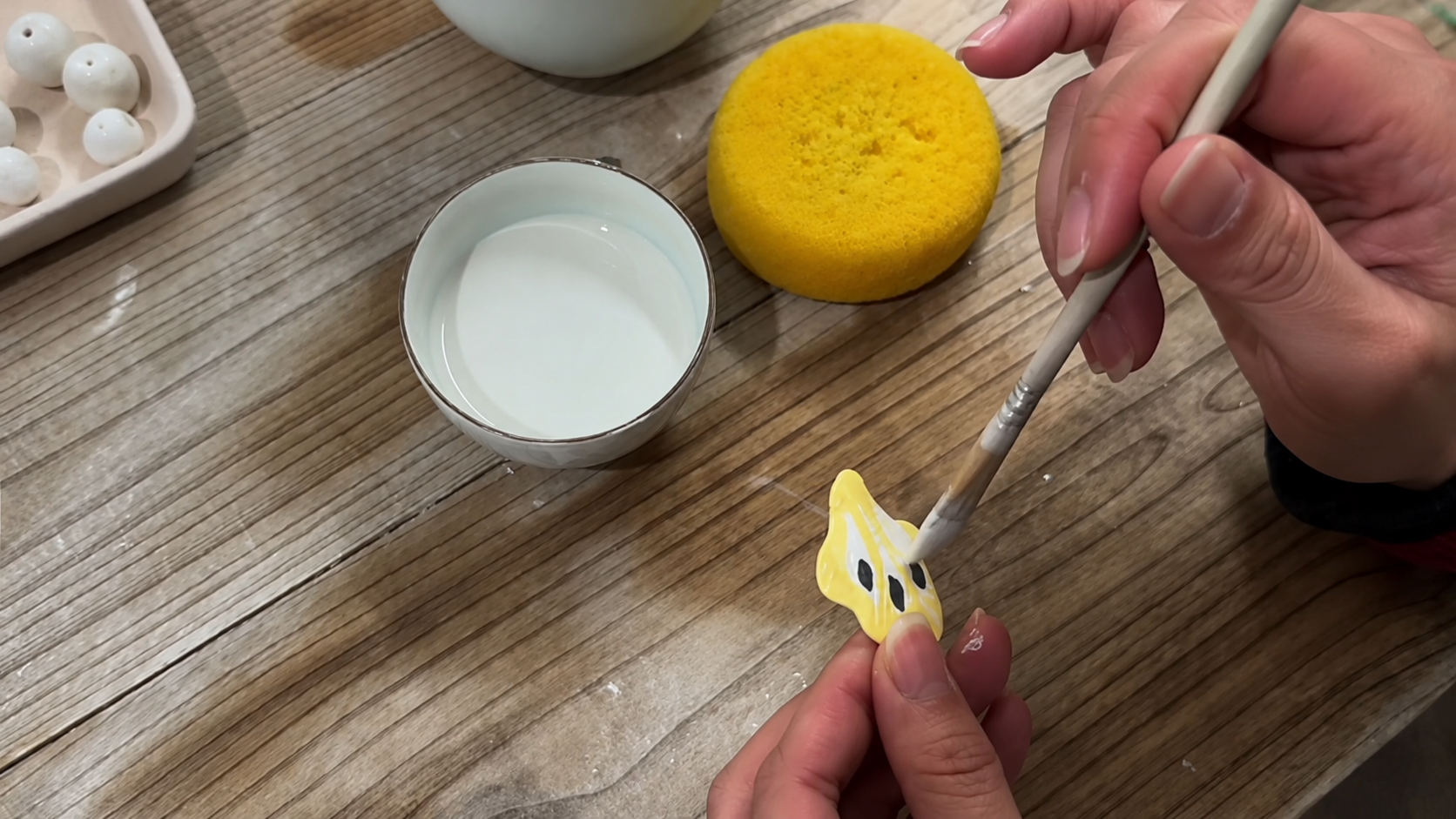
Glaze protects the surface and prepares the piece for its porcelain finish.
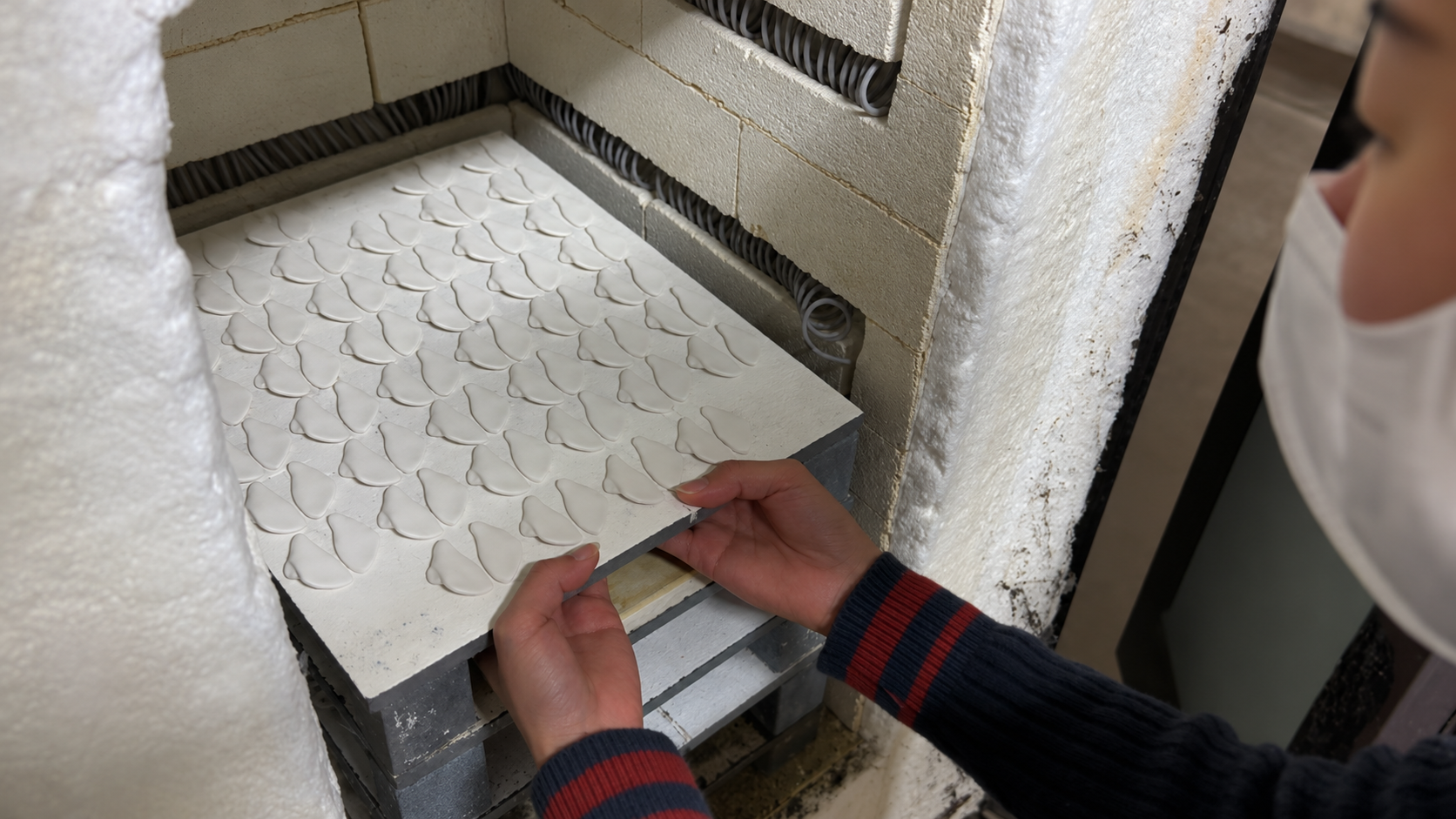
High firing transforms the body into porcelain, fixing surface, color, and material presence.
Copper-gold detail and assembly bring brightness, proportion, and movement into the final piece.
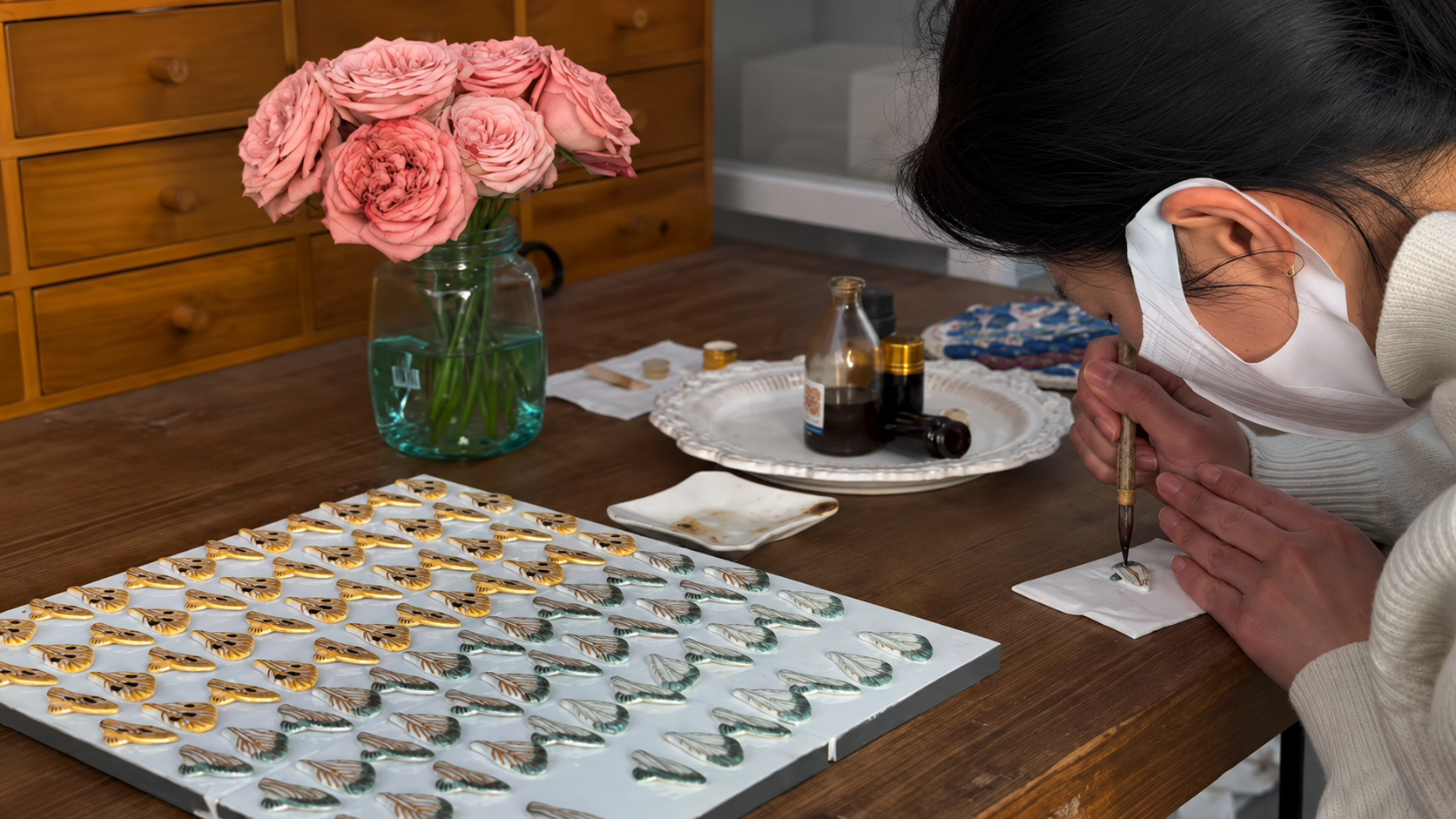
Copper-gold is added sparingly, not as ornament, but as a quiet trace of light.
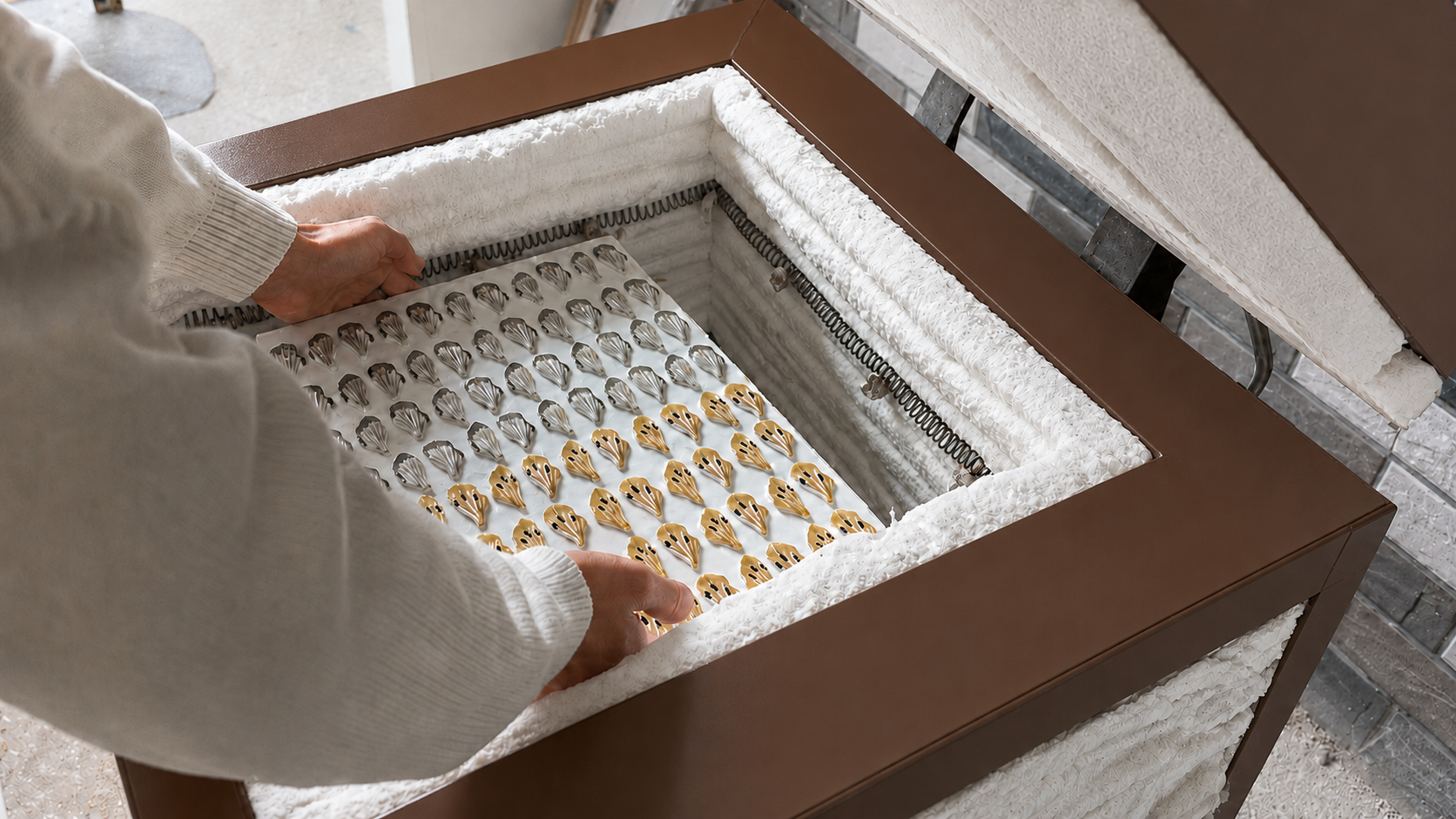
A final firing secures the copper-gold detail into the surface.
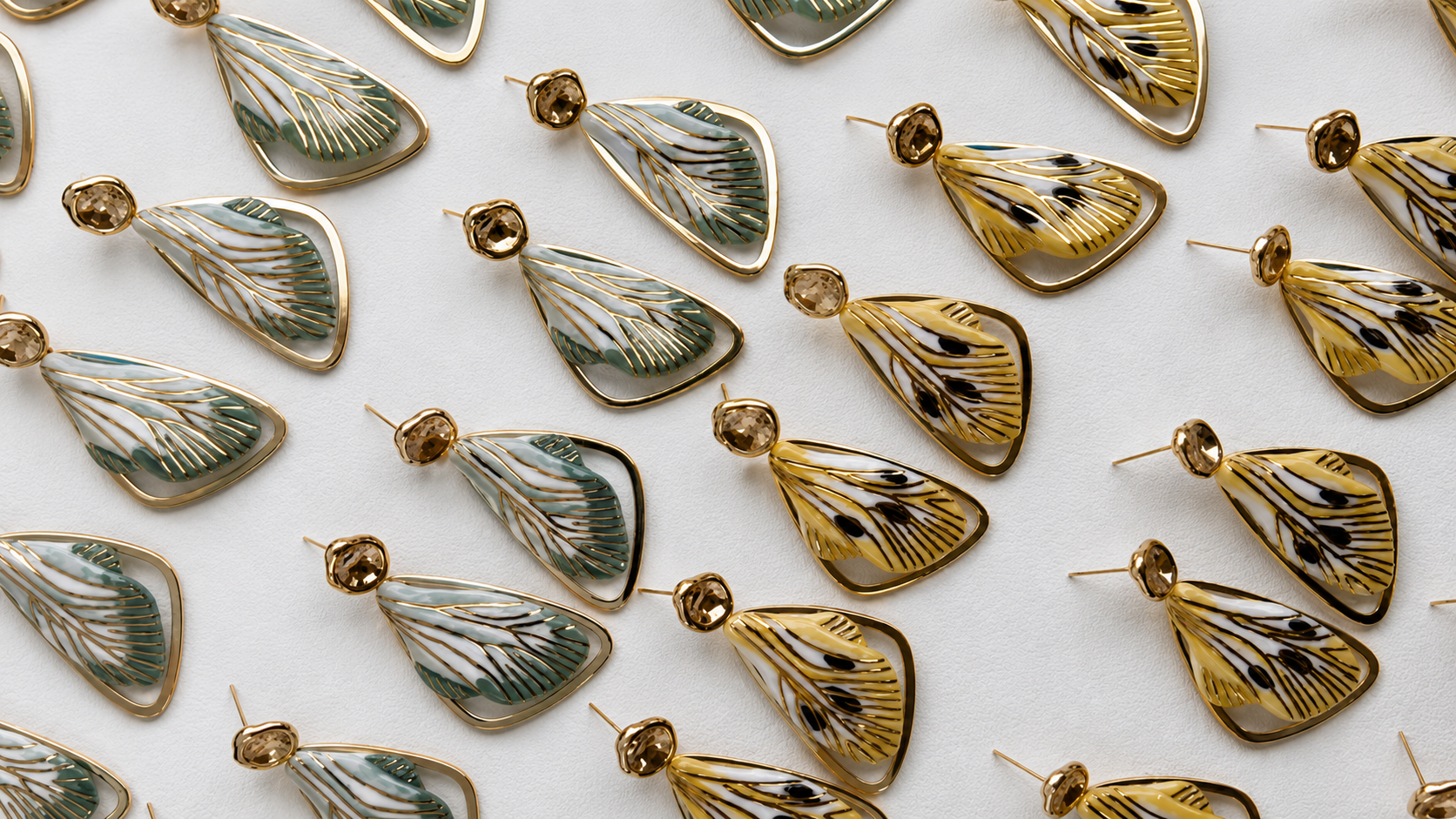
Porcelain is paired with metal, pearls, stones, or chain details according to balance and movement.
Fire is not a single step. It appears three times, each time changing what the porcelain can hold.
700°C
The first firing gives strength to the carved form before surface work begins.
1200°C
High firing gives the material its permanence, clarity, and final porcelain character.
760°C
The final firing secures the copper-gold detail as part of the surface.
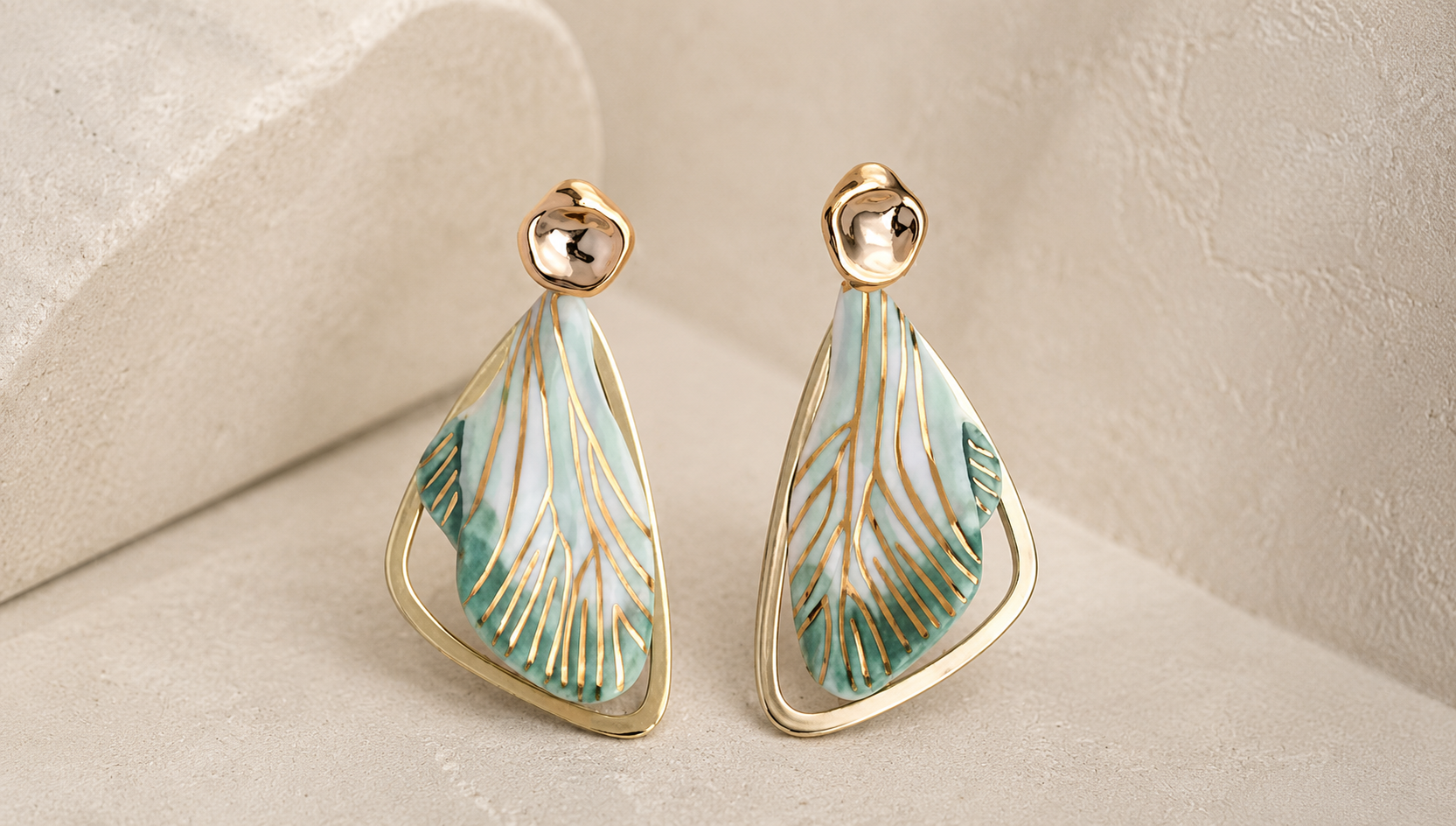
After firing and finishing, each porcelain element is paired with selected components according to balance, proportion, and movement. This is where the object becomes jewelry — close enough to the body, but still carrying the presence of porcelain.
A slight variation in line, glaze, edge, or copper-gold detail is not removed from the work. It remains as evidence of the hand and the firing process.
For ZELIN ART, precision does not mean sameness. It means guiding each porcelain element toward balance while allowing the material to keep its own quiet character.
Quality is not separate from making. Alongside form, glaze, firing, and assembly, ZELIN ART considers the components that touch the skin, the comfort of the finished piece, and the care needed for confident wearing.
Selected skin-contact components have completed SGS testing. Care and material safety details are available on the Care & Quality page.
Care & Quality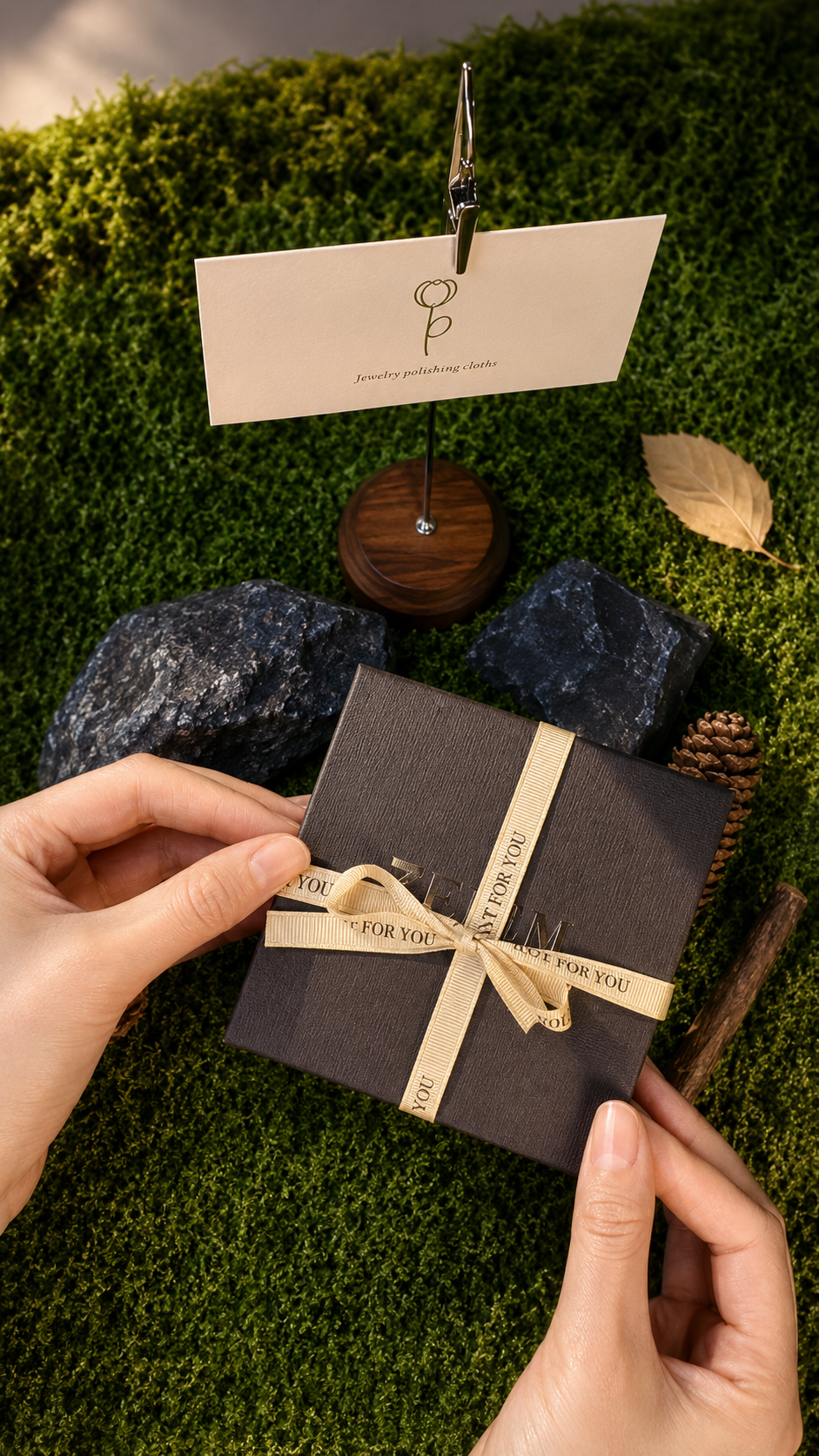
The work does not end at the bench. It continues through packaging, care details, and the quiet moment of receiving.
Presentation RitualSee how hand, fire, porcelain, and proportion come together in the finished jewelry.